
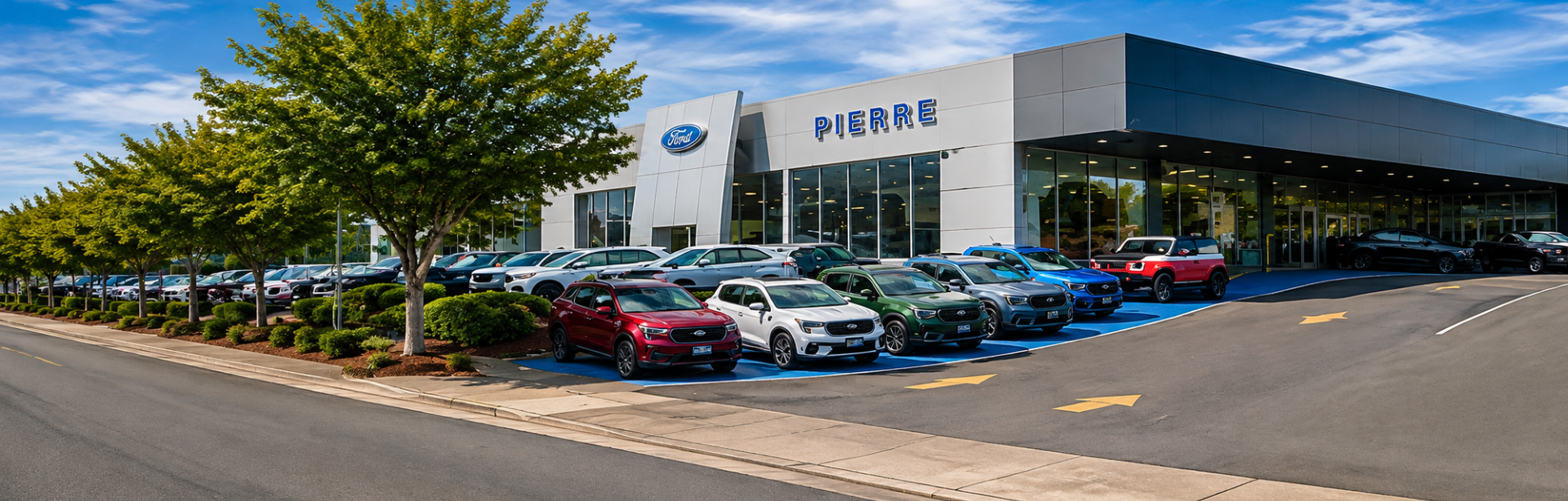
Finding the right vehicle is only the first step; maintaining a dependable Ford truck or SUV requires a lasting partnership built on trust and straightforward service. Whether you are commuting through unpredictable stop-and-go traffic on the Mercer Corridor or hauling gear out to Lake Washington for the weekend, your vehicle needs to be ready for the daily demands of the Pacific Northwest. At Pierre Ford of Seattle, we understand the distinct driving conditions faced by residents across Seattle, Redmond, Bellevue, and Kirkland. We support drivers from Renton to Woodinville and Issaquah with reliable maintenance and practical advice to keep their vehicles running strong in our notoriously wet climate. This hands-on approach ensures you can navigate everything from steep Capitol Hill streets to Interstate 5 with total confidence.
Key Takeaways (TL; DR)
When narrowing down where to find your next dependable truck or SUV, prioritizing a well-equipped facility and straightforward practices makes all the difference. For drivers navigating everything from steep Capitol Hill streets to heavy I-5 congestion, knowing what to look for helps you secure the best long-term value. Here are the core priorities to keep in mind when evaluating Pierre Ford of Seattle and other options around Redmond and Renton:
- Ford-Certified Service Protects Your Investment: Relying on factory-trained technicians ensures proper installation of genuine Motorcraft parts and keeps your 3-year/36,000-mile New Vehicle Limited Warranty fully intact. That means total peace of mind when pushing your vehicle hard on weekend trips to Mount Rainier.
- Matching Capability to Local Conditions: A strong inventory should offer configurations suited for the Pacific Northwest, like an Escape Gas model equipped with Intelligent AWD. Having the right drivetrain is essential for maintaining traction during our frequent rainstorms on steep inclines near Lake Washington.
- Live Inventory Tracking Saves Time: Look for digital storefronts that display real-time availability and exact VIN details for high-demand configurations like the F-150 hybrid. Knowing exactly what sits on the lot prevents wasted trips through dense South Lake Union traffic.
- Transparent Financing Lowers Overall Costs: Dealerships that clearly break down lease terms versus purchase rates help you calculate your true long-term expenses. If you commute daily between Bellevue and Seattle, securing the right rate on a fuel-efficient Maverick Hybrid keeps your monthly budget highly predictable.
- Advanced Diagnostic Capabilities Are Essential: Modern Ford vehicles require specialized equipment to service complex features like BlueCruise hands-free driving or Mustang Mach-E electric powertrains. Ensuring the service bay has up-to-date diagnostic tools prevents recurring issues and keeps your technology running seamlessly.
- Dedicated Commercial Support Keeps Businesses Moving: For local contractors, finding a dealer equipped to service heavy-duty models like the Transit Commercial Van or F-250 Super Duty is crucial. Quick turnaround times on specialized work vehicles minimize downtime for fleets operating across Kirkland and Woodinville.
- Local Roots Reflect Accountability: Dealerships embedded in communities near the University District or Issaquah are accountable to their neighbors and rely on long-term relationships rather than high-pressure sales. A business genuinely invested in the region is much more likely to prioritize your ongoing satisfaction.
What Are the Hidden Costs of Choosing an Unreliable Dealership?
The biggest risks of picking the wrong auto dealer often surface months after you drive off the lot. For Seattle drivers, these hidden costs typically show up as unexpected repair bills, voided warranties, and frustrating service delays. Ultimately, an unverified shop can turn a dependable vehicle into an ongoing financial burden.
Consider the factory coverage on a new Ford. The standard New Vehicle Limited Warranty lasts for 3 years or 36,000 miles, but that protection requires proper maintenance. If an independent shop uses incompatible aftermarket components on your Escape Plug-in Hybrid, you risk compromising that coverage. Imagine commuting down the Mercer Corridor or navigating heavy stop-and-go traffic on 15th Avenue W/NW-if an improper repair fails because a shop cut corners, you could be left covering the entire bill out of pocket just to get your SUV moving again.
Beyond mechanical issues, questionable pricing practices remain a major red flag. The Better Business Bureau (BBB) typically logs thousands of auto-related complaints annually, frequently citing undisclosed fees that aggressively inflate the final contract price. What this means for residents from Bellevue to Renton is that taking the time to find a reputable, certified Ford dealer prevents these stressful surprises. A transparent business protects your investment, ensuring your Bronco or F-150 stays ready for everything from daily urban driving to weekend escapes to Mount Rainier.
What Makes a Ford Dealership Stand Out as Trustworthy?

When you rely on your vehicle for stop-and-go commuting down the Mercer Corridor or hauling weekend gear from Seattle to Mount Rainier, you need a service partner who has your back. Not every location operates with the same level of integrity. Finding a dependable Ford dealer means looking past the showroom shine for concrete proof of their commitment to you and your vehicle.
Start by verifying their track record on independent sites like DealerRater or the Better Business Bureau. While high star ratings are a solid baseline, pay attention to reviews that highlight specific trust signals. Two major green flags are transparently posted fee structures and a roster of Ford-certified technicians who complete ongoing factory training. This expertise is critical when you need specialized care, whether that means diagnosing the hybrid powertrain on a Ford Maverick or servicing the heavy-duty suspension of a gas-powered F-250SD.
Finally, confirm that the location holds official certification from Ford. This manufacturer backing dictates strict standards for customer transparency, including clear parts inventory visibility and a documented multi-point inspection process. For drivers navigating the steep, rain-slicked hills around Kirkland, Bellevue, and Issaquah, knowing your SUV or truck is maintained with factory-level accountability provides serious peace of mind on the road.
Ever Wonder Why Long-Term Dealership Staff Matters So Much?
When a dealership retains its service advisors and technicians for years, it directly translates into faster, more accurate care for your vehicle. Instead of dealing with a revolving door of trainees, you get seasoned professionals who already know the specific demands of driving in the Pacific Northwest. For instance, a veteran technician understands the exact toll that daily stop-and-go traffic on Mercer Street (Mercer Corridor) or steep climbs up Madison Street takes on your vehicle's brakes and suspension.
This historical knowledge is especially vital for modern powertrains. Experienced mechanics develop a sharp eye for wear patterns on local commuter vehicles, leading to quicker diagnoses and less time in the shop. If you navigate from Redmond to South Lake Union in an electric Mustang Mach-E or an Escape Plug-in Hybrid, you need a team deeply familiar with Ford's high-voltage safety procedures and battery thermal management systems. A technician who has worked on these specific architectures for years can trace a regenerative braking sensor issue much faster than someone just reading a diagnostic manual.
Beyond technical speed, low staff turnover builds genuine trust through continuity. When the same advisor checks you in over multiple visits, they remember that you rely on your F-150 gas truck to haul heavy gear out to Issaquah or navigate the wet, winding curves of Lake Washington Boulevard. That means they can recommend tailored maintenance-like a timely 4WD transfer case fluid exchange or a specialized tire rotation schedule based on your typical payload-rather than just handing you a generic service menu.
How Do You Vet a Ford Dealership Before Buying?
Asking a few pointed questions helps filter out the noise and ensures a dealership operates with total transparency. Whether you are battling stop-and-go traffic on the Mercer Corridor or hauling gear out to Issaquah for the weekend, knowing exactly what to ask protects your time and your wallet. Getting clear answers up front means you can trust the team handling your vehicle.
- Is your online inventory completely up to date? Finding the perfect Ford F-150 or Escape online does not help if it sold two days ago. Confirming real-time stock accuracy before you sit in heavy traffic on I-5 saves you a frustrating and unnecessary trip.
- Do you provide upfront, itemized pricing? Request a clear breakdown of the total out-the-door cost, including taxes, registration, and any standard fees. A trustworthy dealership will happily show you the math to ensure there are no surprises at the finance desk.
- Are your technicians Ford-certified and using OEM parts? Modern SUVs like the Ford Explorer require specialized Ford diagnostics and genuine parts to maintain peak performance. Factory-trained technicians have the specific knowledge to handle complex drivetrain repairs right the first time.
- Is your service center fully equipped for EV and hybrid care? If you commute in a Mustang Mach-E or a Maverick Hybrid through tech-heavy hubs like Redmond and Bellevue, your shop needs specialized high-voltage training. Proper battery calibration and software updates are critical for maximizing your electric range.
- What financing options are available through Ford Credit and local lenders? A straightforward finance department will walk you through manufacturer-backed rates alongside offers from local community banks. Comparing these side-by-side helps secure the lowest possible interest rate for your budget.
- What are the exact terms of the warranty or return policy? Always clarify how the standard 3-year/36,000-mile New Vehicle Limited Warranty or a Gold Certified pre-owned plan applies to your specific vehicle. Understanding these protections gives you peace of mind when navigating wet, unpredictable conditions along Lake Washington Boulevard.
What Tells You a Ford Inventory Search is Worth Your Time?

A dealership's digital showroom shouldn't just be a static list of cars; it needs to reflect the real-world demands of navigating the Pacific Northwest. What this means for Seattle drivers is that a transparent, real-time inventory system saves you from fighting heavy I-5 traffic only to find the vehicle you wanted is already sold. If you frequently commute along the busy Mercer Corridor or plan weekend escapes out to Woodinville, you want a seamless way to verify that the exact capability you need is actually sitting on the lot.
Look for mobile-friendly platforms that offer deep, practical filters. You should be able to effortlessly narrow your search by model, trim, specific packages, and drivetrain. For example, filtering instantly for an Intelligent 4WD Ford Explorer XLT versus a standard rear-wheel-drive setup changes your rainy-weather traction drastically. Quality listings will always feature high-resolution photos of the actual vehicle rather than generic factory stock images, backed by real-time updates and VIN-specific details so you know exactly what equipment is included.
Finally, a reliable online inventory removes the guesswork from your budget. Expect a clear price breakdown with all fees noted upfront, allowing you to confidently cross-reference numbers using independent home pages like Kelley Blue Book or Edmunds. This straightforward approach guarantees that the capable, weather-ready Ford you research on your phone is exactly what you test drive in person.
How Does a New Ford Compare with Ford Blue Advantage™?
Buying a brand-new Ford gives you a completely fresh start, complete with the latest SYNC® technology and full factory warranties. It's an exciting route if you want zero miles on the odometer before tackling the steep, rain-slicked hills of downtown Seattle or starting a long road trip to Mount Rainier. On the flip side, Ford Blue Advantage™ offers a smart alternative that balances upfront value with long-term peace of mind. It's a popular path for buyers commuting from Redmond or Bellevue who want modern safety features and reliable traction without paying the premium new-car sticker price.
Because every driver's budget and lifestyle are different, the Ford Blue Advantage™ program offers two distinct certification tiers. The premium Gold Certified tier applies to vehicles up to six years old with fewer than 80,000 miles, requiring a rigorous 172-point inspection and providing a 7-year/100,000-mile powertrain warranty. Alternatively, the Blue Certified value tier covers vehicles up to 10 years old with as many as 120,000 miles, backing them with a 139-point inspection and a 90-day/4,000-mile comprehensive warranty.
What this means for Washington drivers is that you get dependable, rigorously tested vehicles-like a capable Explorer or an efficient Escape Hybrid-with out-of-pocket protection. Whether you are navigating heavy traffic along the Mercer Corridor or hauling weekend gear out past Issaquah, a certified model shields you from unexpected repair bills. With added perks like 24/7 Roadside Assistance and a comprehensive CARFAX® Vehicle History Report, you effectively score a like-new driving experience at a much lower purchase price.
| Feature | New Ford | Ford Blue Advantage™ (CPO) |
|---|---|---|
| Warranty | 3-year / 36,000-mile New Vehicle Limited Warranty | Up to 7-year / 100,000-mile Powertrain Warranty (Gold Certified) |
| Inspection | Factory quality assurance | Comprehensive 172-point or 139-point inspection |
| Roadside Assistance | Included 24/7 for 5 years / 60,000 miles | Included 24/7 with certified warranty coverage |
| Cost | Higher initial cost, full factory coverage | Lower purchase cost backed by certified inspection and warranty |
Which Ford Models Make the Most Sense for Seattle Drivers?
Ford's current lineup offers a strategic mix of intelligent all-wheel-drive systems, hybrid efficiency, and rugged capability built specifically for the Pacific Northwest. What this means for Seattle drivers is having the dependable traction necessary to safely navigate slick, rain-soaked inclines in Capitol Hill, while still packing the cargo space required for a weekend hiking trip out to Mount Rainier.
If your daily routine involves creeping through stop-and-go congestion on Interstate 5 or winding along Lake Washington Boulevard, opting for one of Ford's hybrid or fully electric powertrains can drastically reduce your fuel consumption compared to a traditional gas engine. Based on industry evaluations from resources like Edmunds, choosing models equipped with modern driver-assist technologies is increasingly essential for managing the unpredictable flow of dense urban traffic.
Whether you need a versatile commuter for the city or a heavy-duty hauler for the suburbs, several Ford vehicles consistently stand out for local drivers:
- Ford Escape & Escape Plug-in Hybrid: Compact enough to easily parallel park near Pike Place Market, yet spacious enough to handle a full load of groceries. The available plug-in hybrid configuration is particularly useful for maximizing fuel efficiency during heavy afternoon delays on Mercer Street (Mercer Corridor).
- Ford Explorer: This versatile three-row SUV offers ample room for growing families. When equipped with available intelligent 4WD, it maintains sure-footed grip whether you are driving through a sudden downpour in Issaquah or taking a scenic family road trip along Puget Sound.
- Ford Maverick: A unique, compact pickup available with a highly efficient hybrid powertrain. It is perfectly sized for navigating tight residential streets in the University District while still providing a functional open bed for transporting bicycles or home improvement supplies to Kirkland.
- Ford Mustang Mach-E: This all-electric crossover blends responsive performance with zero tailpipe emissions. Its tech-forward cabin and impressive electric range make it a highly practical choice for professionals commuting between Seattle and the tech hubs of Redmond or Bellevue.
- Ford Bronco: Engineered with standard 4x4 capability and a Terrain Management System featuring G.O.A.T. Modes, this rugged SUV is built for outdoor enthusiasts who frequently venture past city limits to tackle unpaved mountain service roads.
- Ford F-150: A cornerstone of the full-size truck segment, models like the XLT and Lariat provide immense towing capability and smart trailering tech. It remains an exceptionally capable tool for hauling heavy gear out of Renton or managing demanding weekend projects in Woodinville.
Which Ford SUVs and Crossovers Fit the Seattle Lifestyle?
Ford SUVs match the Pacific Northwest lifestyle by combining capable drivetrain systems with versatile cabin space and smart hybrid options. Ever wonder why you see so many utility vehicles around South Lake Union and the University District? What this means for Seattle drivers is getting a balanced ride that handles daily urban efficiency just as well as weekend trail readiness. If you commute daily via 15th Avenue W/NW and Elliott Avenue, opting for a plug-in hybrid over a standard gas engine changes your fuel routine entirely, letting you handle most city errands purely on battery power before the gas engine kicks in.
- 2026 Ford Escape: This compact crossover is a natural fit for tight parking and dense city living in neighborhoods like Capitol Hill. In the Plug-In Hybrid trim, it delivers an EPA-estimated 37-mile all-electric driving range (FWD), which easily covers routine trips around town. Inside, sliding second-row seats help maximize the 65.4 cubic feet of total cargo space, giving you flexible room for groceries or weekend outdoor gear.
- 2027 Ford Explorer: For growing families needing a spacious three-row setup, the Explorer steps up to the plate. The Active trim features a strong 2.3L EcoBoost I-4 gas engine producing 300 hp and 310 lb-ft of torque. That reliable hauling power, combined with 85.8 cubic feet of maximum cargo capacity, makes it perfect for loading up the kids and gear for a trip across Lake Washington to Kirkland or a youth sports tournament in Redmond.
- 2026 Ford Bronco: Built for leaving the pavement behind, this body-on-frame SUV is your ticket from the Puget Sound out to the rugged trails of Mount Rainier. Every model includes the Terrain Management System with G.O.A.T. Modes (Goes Over Any Type of Terrain), while equipping the available Sasquatch Package pushes ground clearance up to 11.6 inches. Plus, trims like the Badlands offer rubberized washout flooring with integrated drain plugs, so you can easily clean the cabin after a muddy Washington hike.
What About Ford's Truck Lineup?
Ford's truck roster brings Built Ford Tough capability to everything from urban job sites to weekend mountain escapes. Every new model is backed by a 3-year/36,000-mile Bumper-to-Bumper Limited Warranty, and many trims standardize advanced safety tech like Pre-Collision Assist with Automatic Emergency Braking. What this means for Seattle drivers is having the AWD or 4WD traction to tackle wet, steep streets, plus the payload versatility to haul gear confidently. If you commute daily but need an open bed for weekend projects, downsizing from a traditional half-ton to a compact hybrid can drastically reduce your fuel costs while still getting the job done. Whether you are navigating the dense traffic of the Mercer Corridor or towing a boat toward Lake Washington, Ford's lineup scales to fit the specific task.
- 2026 Ford Maverick: This compact pickup changes how urban drivers think about utility. Equipped with the 2.5L Hybrid powertrain, the XL trim achieves an EPA-estimated 40 MPG in the city, making it highly efficient for stop-and-go commutes along 15th Avenue W/NW. Its 4.5-foot FLEXBED® storage system handles DIY supplies easily, while its smaller footprint allows you to grab tight street parking in Capitol Hill.
- 2026 Ford Ranger: When you need robust four-wheel-drive capability without a massive footprint, this midsize truck delivers. Powered by a standard 2.3L EcoBoost® engine, the XL trim can tow up to 7,500 pounds when properly equipped. It's a practical choice for throwing muddy hiking gear in the back after a weekend at Mount Rainier, offering dependable ground clearance and modern connectivity.
- 2026 Ford F-150: The cornerstone of the lineup utilizes a high-strength, military-grade aluminum-alloy body on a fully boxed steel frame. Depending on the configuration, like the XL trim paired with the available 3.5L EcoBoost® V6, it offers a towing capacity of up to 13,500 pounds. Available innovations like the Pro Power Onboard™ system-delivering up to 7.2kW on hybrid models-essentially turn the truck into a mobile generator for remote job sites around Puget Sound.
- 2027 Ford Super Duty: Engineered for extreme demands, this heavy-duty series (including the F-250 and F-350) steps in when standard towing isn't enough. With its available 7.3L V8 gas engine and reinforced chassis, it is built for commercial hauling, pulling heavy equipment down Interstate 5, or managing massive multi-axle trailers with absolute confidence.
What Electric and Hybrid Vehicles Does Ford Offer?
Ford provides a robust lineup of electrified options, spanning from the all-electric Mustang Mach-E crossover to the highly efficient Escape Plug-in Hybrid SUV and the Maverick Hybrid pickup. What this means for drivers in the Seattle area is having the freedom to choose a powertrain that fits local driving demands-whether that means reducing tailpipe emissions entirely or simply cutting down on fuel consumption during heavy gridlock.
Before making the switch to an electrified vehicle, it helps to keep a couple of practical regional factors in mind. First, consider your daily charging logistics. While public charging stations are increasingly common around tech hubs in South Lake Union and Capitol Hill, installing a Level 2 charger at your home in Bellevue or Kirkland often provides the most reliable, cost-effective daily experience. Second, our mild Pacific Northwest climate is generally favorable for electric batteries, though frequent windshield wiper and heater use during chilly winter rainstorms can temporarily reduce overall driving range.
If your daily routine involves stop-and-go traffic along the Mercer Corridor or 15th Avenue W/NW, relying on the regenerative braking systems found in these models recaptures energy while significantly reducing wear on your physical brake pads. Here are a few notable electrified choices in the current Ford lineup:
- 2026 Ford Mustang Mach-E: This all-electric sport crossover blends responsive handling with a remarkably quiet ride. It serves as an ideal setup for professionals commuting from Redmond into the city, offering instant torque for effortless highway merging on I-5.
- 2026 Ford Escape Plug-in Hybrid: Many Washington drivers appreciate this SUV for its dual-powertrain flexibility. You can rely on electric power for short errands along Lake Washington Boulevard, while the onboard gas engine automatically takes over for longer weekend excursions out to Mount Rainier.
- 2026 Ford Maverick XL Hybrid: Operating on a proven 2.5L Hybrid FWD eCVT system that generates 191 horsepower, this compact crew-cab truck is engineered for genuine urban utility. It delivers an EPA-estimated 40 mpg in the city (varies by trim and driving conditions), making it easy to haul project supplies from Westlake Center without burning excess fuel. Standard interior tech includes an 8-inch Digital Instrument Cluster and Ford Co-Pilot360® Technology equipped with Pre-Collision Assist.
Why Does Ford-Certified Service Matter So Much?

Navigating Seattle's stop-and-go traffic along the Mercer Corridor or handling steep, rain-slicked climbs in Capitol Hill requires your vehicle to perform at its absolute peak. While an independent shop might quote a slightly lower upfront rate, they typically lack the proprietary diagnostic software required for today's Ford lineup. That means a modern F-150 or Explorer could miss crucial factory software updates during what seems like a routine visit.
Having factory-trained technicians handle your truck or SUV protects your investment. It ensures everything from heavy-duty brake rotors to complex electrical systems operates exactly as the engineers intended, protecting both your safety on unpredictable roads and the vehicle's long-term resale value.
What Exactly Makes a Technician "Ford-Certified"?
Earning this title means a service center operates strictly under the guidelines set by the manufacturer. Mechanics do more than just turn wrenches; they complete rigorous, brand-specific training on systems unique to the Blue Oval. For example, safely servicing the high-voltage architecture on a Mustang Mach-E or calibrating the powertrain modules on a hybrid Maverick requires exact factory procedures.
These technicians also rely exclusively on Genuine Ford and Motorcraft® parts. This guarantees an exact fit and proven durability, whether you need a simple cabin air filter replacement or a major suspension repair. Certified shops also maintain direct access to Ford's technical service bulletins (TSBs), meaning any recognized vehicle quirks are caught and addressed before they become major headaches.
How Do Certified Dealerships Compare to Neighborhood Mechanics?
Many drivers around Woodinville, Bellevue, and Issaquah wonder if they should just take their car to a corner garage to save a few dollars. While local mechanics often do honest work, they simply cannot match the comprehensive resources of an authorized dealer. Independent shops frequently resort to aftermarket components to cut costs. Using third-party parts can compromise your vehicle's capability, alter its performance, and potentially complicate your 3-year/36,000-mile New Vehicle Limited Warranty coverage.
Consider the complexity of modern driver-assist systems. If you commute via 15th Avenue W/NW, Elliott Avenue, Western Avenue, or Madison Street in heavy Pacific Northwest rain, you rely heavily on Ford Co-Pilot360™ technology for blind-spot monitoring and pre-collision assist. Proper alignment and sensor calibration demand specialized factory equipment that most independent bays do not own. Dealerships possess the dedicated tools and software to maintain these advanced safety features properly, delivering absolute confidence whether you are navigating downtown gridlock or taking a weekend drive down Lake Washington Boulevard.
What Are the Benefits of Financing Through a Ford Dealership?
What this means for Seattle drivers is less time navigating paperwork and more time enjoying the drive. Instead of spending your afternoon going from bank to bank, a dealership finance team handles the legwork by tapping into Ford Credit alongside a network of local and national lenders simultaneously. Consolidating the purchase and the loan into a single location streamlines the entire transaction.
Whether you are battling stop-and-go traffic on the Mercer Street (Mercer Corridor) or cruising down Lake Washington Boulevard, buying a vehicle requires enough effort without adding a complicated bank loan to the mix. Dealership finance centers regularly process high volumes of loans, giving them the leverage to negotiate competitive annual percentage rates (APRs) based on your credit profile. They can instantly compare terms across multiple institutions, presenting you with the most efficient route to getting your keys.
A transparent finance department will clearly outline every element of your agreement. You should never feel pressured; instead, the team will walk you through down payment impacts, interest rates, and loan durations so you understand exactly how your monthly payment is calculated.
How Does a Ford Finance Center Streamline Your Purchase?
A modern finance center operates with efficiency in mind, providing a low-pressure environment where you can review hard numbers. Tech-savvy drivers in Redmond and Bellevue often appreciate the digital tools that modern dealerships provide, allowing much of the heavy lifting to be done before arriving at the lot.
Here is what you should expect from a seamless finance experience:
- Digital Pre-Approval: You can often submit your application securely online from home. This saves valuable time at the dealership and gives you a realistic budget upfront.
- Flexible Lender Options: By partnering with Ford Credit and trusted Washington banks, finance experts can present multiple offers. This ensures you find a term and rate that align with your financial goals.
- Transparent Terms and Fees: A professional team breaks down interest rates, local taxes, and documentation fees without relying on confusing industry jargon. You will know exactly where every dollar of your payment goes.
- Clear Add-On Explanations: If you are considering optional protections like GAP coverage or a Ford Protect Extended Service Plan, the staff will lay out the exact cost and long-term value so you can make an educated choice.
Should I Lease or Finance My New Ford?
The right financial path depends heavily on your driving habits, budget, and long-term goals. If you log a modest 10,500 miles a year commuting from Kirkland to South Lake Union, leasing might be the perfect fit. Conversely, if you regularly tow a boat over the Cascades or take cross-country road trips, financing makes more sense.
Leasing allows you to drive a brand-new vehicle for a set term-usually 24 to 36 months-while only paying for the depreciation that occurs during that time. This generally results in a lower monthly payment compared to buying. It is ideal for drivers who want to upgrade to the latest tech features every few years. Just keep in mind that leases carry strict mileage limits, typically ranging from 10,500 to 15,000 miles annually, and you must return the vehicle in good condition to avoid fees.
Financing a Ford F-150 or Explorer means you are building equity with every monthly installment. Once the loan is paid off, you own the vehicle outright and can drive it for years without a car payment. You are also free to customize your truck or SUV for weekend trips to Mount Rainier without worrying about lease-end penalties. Additionally, Washington state tax structures differ between the two; leasing generally taxes only the monthly payment, while financing calculates tax on the total purchase price.
How Do I Maximize My Trade-In Value and Choose the Right Selling Path?
Deciding whether to trade in your current vehicle or sell it privately comes down to balancing time, convenience, and local market demand. For drivers navigating the Pacific Northwest, upgrading to a capable AWD vehicle or an efficient hybrid often starts with getting the most out of the car already in your driveway. What this means for Seattle drivers is that bringing in a well-maintained trade can significantly offset the cost of upgrading to a Ford F-150 equipped with available 4WD for trips out to Mount Rainier, or an Escape Hybrid that delivers excellent EPA-estimated fuel economy for stop-and-go commutes on Interstate 5. Getting top dollar requires a little preparation, understanding regional demand, and timing your visit effectively.
How can I get the best value for my trade-in?
If you commute via Mercer Street (Mercer Corridor) or spend weekends cruising Lake Washington Boulevard, your car has seen its share of city wear. Presenting a clean, documented vehicle helps appraisers give you the highest possible valuation based on current market data and your specific VIN.
- Provide Service Records: Documenting regular maintenance proves your vehicle was cared for. This is especially helpful if you've kept up with specific milestones, like timely oil changes or tire rotations.
- Detail the Interior and Exterior: A clean car simply makes a better impression during the appraisal. Removing pet hair from weekend trips to Marymoor Park in Redmond or vacuuming out trail dirt goes a long way.
- Reference Trusted Valuations: Check standard industry benchmarks by visiting the Kelley Blue Book or Edmunds homepages. Having a baseline idea of your car's worth helps set realistic expectations.
- Understand Local Market Demand: Appraisers look closely at what sells well around Bellevue and Kirkland. Used AWD SUVs and trucks currently command premium values because they match our rainy Pacific Northwest climate.
Should I sell my car privately or trade it in?
Managing a private sale yourself might yield a slightly higher purchase price, but it requires substantial time and effort. Trading in your vehicle at a trusted location streamlines the transition directly into your new Ford Mustang Mach-E or Bronco Sport. For most folks around Issaquah or Renton, the convenience of a trade-in easily outshines the prolonged hassle of acting as your own salesperson.
- Time and Convenience: Selling privately means you handle the advertising, field late-night inquiries, and schedule test drives. A trade-in is completed in a single visit alongside your new vehicle purchase.
- Security and Safety: Meeting strangers in parking lots for test drives carries inherent risks. Dealership trades offer a safe, professional environment to hand over your keys.
- Paperwork Management: Processing titles, bill of sale documents, and state DMV forms can be confusing. When you trade, experienced staff handles the entire legal transfer so you don't have to worry about missing a signature.
When are smart times to shop in the area?
Finding the right moment to upgrade often depends on seasonal inventory shifts and manufacturing cycles rather than just picking a random weekend. Late summer and early fall are traditionally when upcoming model-year vehicles begin arriving. This transition period frequently prompts national sales events to clear out outgoing inventory, making it a strategic time to browse the lot.
You might also spot manufacturer promotions during major holiday weekends or at the end of financial quarters. While inventory fluctuates, monitoring the Ford homepage for regional sales events in the Seattle area can help you pinpoint advantageous times to explore lease options or financing terms. Ultimately, the best time to act is when your current vehicle still holds strong value and you are ready for a reliable upgrade.
Frequently Asked Questions (FAQs)
What is the history behind Pierre Ford of Seattle?
As part of the family-owned Pierre Auto Group founded by Bill Pierre Sr. in 1947, Pierre Ford of Seattle brings nearly eight decades of automotive experience to the community. The team provides knowledgeable support throughout the entire sales, financing, parts, and service process to drivers in Seattle, Bothell, Kenmore, Kirkland, and Lynnwood.
What customer service philosophy does Pierre Ford of Seattle follow?
Pierre Ford of Seattle is guided by the Golden Rule philosophy, focusing on honest relationships and professional service. The dealership's team treats every customer like family, working directly with you to ensure long-term satisfaction and dependable automotive support.
What should I look for in a Ford dealership?
A great Ford dealer has strong customer reviews, transparent pricing, and Ford-certified technicians. Pierre Ford of Seattle maintains a real-time online inventory and works closely with you to ensure a smooth process, whether you are commuting along 15th Avenue W/NW or navigating the Mercer Corridor.
Is it better to finance or lease a Ford?
Leasing is often better for those who want lower monthly payments and to drive a new Ford model every few years. Financing is ideal for drivers who want to build equity and own their vehicle long-term. Pierre Ford of Seattle's finance team will review the agreements with you and help structure a plan that fits your budget and daily drives across Lake Washington Boulevard.
How do I find a trustworthy Ford dealership?
Look for a dealership with factory-trained technicians, transparent processes, and deep community roots. Pierre Ford of Seattle serves as your active partner in the car-buying process, offering certified support and genuine Ford parts to keep your vehicle ready for wet Pacific Northwest weather or weekend trips out to Issaquah.
What questions should I ask at a Ford dealership?
Ask if their technicians are Ford-certified, if their online inventory is live, and if they offer digital financing tools. You can also inquire with Pierre Ford of Seattle about the team's service capabilities for hybrid and electric models, and any warranties on parts and repairs. You can explore more about official Ford model capabilities directly at https://www.ford.com/.